

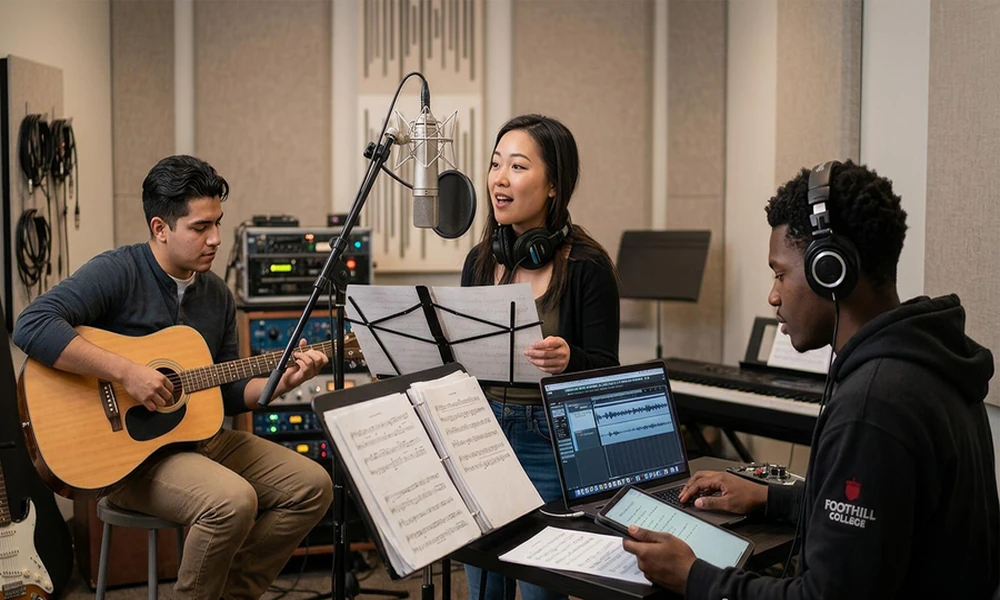
A passion for music can lead to many different careers, but developing that passion into professional skills requires more than regular practice. Whether you want to perform onstage, produce recordings, write original songs, or work behind the scenes, the right training can help you build a stronger foundation.
The challenge is knowing which educational path fits your ambitions. With options ranging from short courses to degree programs, aspiring musicians need to evaluate more than a school’s reputation or course title.
Understanding your career goals, identifying your skill gaps, and comparing practical learning opportunities can help you make an informed decision about your musical education.
Start With Your Long-Term Music Career Goals
Before exploring educational programs, consider what you actually want to do in the music industry.
A guitarist hoping to become a professional session musician has different training needs from someone interested in electronic music production. Similarly, a songwriter pursuing original releases may benefit from a different combination of skills than someone planning to work in artist management.
Start by identifying the professional activities that interest you most.
For example, aspiring performers may prioritize instrumental technique, sight-reading, improvisation, and stage experience. Future producers might focus on recording software, sound design, arrangement, and mixing.
Students interested in the business side of music may need knowledge of contracts, licensing, promotion, and artist development.
Your interests may overlap, and that’s perfectly reasonable. Many music careers involve multiple responsibilities.
However, defining a primary direction will make it easier to compare training options without getting distracted by programs that don’t support your goals.
Compare Programs Based on What You’ll Actually Learn
Once you’ve identified your preferred career direction, the next step is examining what different programs teach.
Course titles can sound appealing without revealing much about the learning experience. Instead of relying on broad descriptions, look closely at the curriculum, practical assignments, available specializations, and expected learning outcomes.
For students considering formal education in Southern California, reviewing Los Angeles music programs can provide a useful starting point for understanding different pathways in performance, songwriting, production, recording, and music business.
As you compare educational opportunities, consider several important questions:
- Does the curriculum focus on the skills required for your preferred career?
- Will you have opportunities to apply what you learn through performances or projects?
- Does the training cover relevant technology and contemporary working methods?
- Can you explore related disciplines without losing focus on your primary specialization?
- Are the program’s schedule, duration, and qualification appropriate for your circumstances?
These questions help distinguish a program that simply covers an interesting subject from one that supports your professional development.
It’s also worth examining how courses progress. A well-structured learning experience should help students move from foundational understanding toward more demanding creative or technical work.
Look for Opportunities to Develop Practical Skills
Music involves learning concepts, but professional competence also depends on applying those concepts consistently.
For performers, practical experience might include rehearsing with other musicians, interpreting unfamiliar material, preparing live arrangements, or performing under realistic conditions.
For producers and recording engineers, useful activities include organizing recording sessions, troubleshooting audio problems, editing performances, and completing mixes.
Songwriters benefit from developing ideas into finished compositions, receiving constructive feedback, and collaborating with artists who bring different musical perspectives.
When evaluating training, find out how much time students spend creating, rehearsing, recording, or working on projects.
Consider whether assignments result in tangible work that demonstrates improvement.
A completed recording, an original composition, or a documented live performance can help students understand their strengths while identifying areas that need further development.
Practical projects also create opportunities to build a portfolio. Rather than simply listing courses completed, students can eventually demonstrate their abilities through examples of their work.
Consider the Value of Collaboration and Professional Connections
Musical development rarely happens entirely in isolation.
Performers collaborate with producers, songwriters work with vocalists, and recording engineers coordinate with artists to achieve a particular sound.
Learning alongside people with different strengths can introduce new creative approaches and help students become more effective communicators.
When researching a music program, consider whether students participate in group projects, ensemble performances, recording sessions, or collaborative assignments.
The experience of learning from instructors with relevant professional backgrounds may also be valuable, particularly when their teaching includes feedback on real-world challenges.
However, access to industry professionals shouldn’t be treated as a guarantee of employment or career success.
Focus instead on whether the learning environment encourages constructive feedback, professional responsibility, and meaningful collaboration.
These habits remain useful regardless of the specific direction your career takes.
Evaluate Learning Formats, Costs, and Time Commitments
Even a program with excellent subject coverage may not be appropriate if its structure doesn’t match your circumstances.
Some students benefit from campus-based education, where in-person rehearsals, facilities, and scheduled classes provide a structured learning environment.
Others need the flexibility of online learning because of employment, family responsibilities, or geographic limitations.
Neither format is automatically better for every musical discipline.
For example, online study may work well for certain theory, songwriting, and production activities, while some performance and recording experiences benefit from access to shared equipment and rehearsal spaces.
Consider the total financial commitment as well. Tuition is only one factor; equipment, software, transportation, housing, and living expenses may also affect affordability.
Compare the time required for certificates, shorter courses, and degree programs against the depth of training you want.
Before committing, ask whether the educational pathway supports your present needs and whether you can realistically complete it.
Conclusion
Choosing music training is ultimately about finding an educational experience that supports your creative interests and professional ambitions.
Start by clarifying the kind of work you want to pursue. Then examine curricula, practical learning opportunities, collaboration, study formats, and costs before making a decision.
Remember that musical development doesn’t end with a certificate or degree. Consistent practice, curiosity, feedback, and completed creative projects all contribute to long-term growth.
The most useful training is not necessarily the longest or most expensive option. It’s the one that helps you develop relevant skills, understand your strengths, and take meaningful steps toward the music career you want to build.
